

India’s ninth Rashtriya Poshan Maah begins in Varanasi on September 9, 2026, with a sharper focus on what reaches women and children at the Anganwadi level. Union Women and Child Development Minister Annapurna Devi is scheduled to launch the month-long campaign at the Rudraksh International Cooperation and Convention Centre, alongside Uttar Pradesh Chief Minister Yogi Adityanath and other ministers.
This year’s theme, “Hamari Anganwadi Hamari Jimmedari”, shifts attention towards community ownership of Anganwadi centres, better meal quality, protein-rich diets, early childhood development and faster maternity benefit coverage. The official Poshan Maah 2026 launch note says activities will run across Anganwadi centres, schools, Panchayats and households in all States and Union Territories.
Poshan Maah 2026 Launch Puts Anganwadis At The Centre
The 2026 campaign is tied closely to revised Supplementary Nutrition Programme rules under Mission Saksham Anganwadi and Poshan 2.0. For the first time, the guidelines formally define Hot Cooked Meals and require Supplementary Nutrition Programme menu boards at Anganwadi centres. The campaign will also push the faster formation and functioning of Anganwadi Management Committees, giving local communities a bigger role in checking meal quality, service delivery and beneficiary entitlements.
The scale is significant. As of July 31, 2026, India had nearly 13.99 lakh Anganwadi centres, around 13.30 lakh Anganwadi workers and almost 8.94 crore registered beneficiaries. More than 7.2 crore beneficiaries were children aged six months to six years, while pregnant women and lactating mothers together accounted for nearly 1.1 crore. The government has also approved two lakh centres for upgrade as Saksham Anganwadis with improved nutrition and early-learning infrastructure.
The launch also comes one day after the Prime Minister’s Office highlighted Poshan initiatives and the Anganwadi system, drawing attention to Direct Benefit Transfers, social audits and nutritious food for women, children and adolescent girls. That official push gives the Varanasi event wider visibility as the government tries to turn nutrition delivery into a community-led campaign rather than a one-month publicity exercise.
Key highlights of National Poshan Maah 2026 include:
- Protein-rich local diets and greater dietary diversity for women, children and families.
- Weekly rotation of fresh hot-cooked meals using millets, pulses and seasonal vegetables.
- Mandatory menu boards and at least one Anganwadi Management Committee meeting during the campaign.
- Developmental milestone recording for enrolled children aged zero to three, followed by referrals where needed.
- A 100% saturation drive for eligible beneficiaries under Pradhan Mantri Matru Vandana Yojana.
Five Nutrition Measures Will Directly Target Women And Children
Dietary diversity is the first major priority. Anganwadi centres will hold recipe demonstrations using affordable local foods, while Poshan Melas and protein campaigns will promote pulses, legumes, nuts, seeds, milk products, eggs and other suitable protein sources. The aim is to make balanced meals easier to build using foods already available locally.
Fresh hot meals form the second pillar. States and Union Territories are being encouraged to rotate weekly menus and use millets, pulses and seasonal vegetables. Meal demonstrations, community tasting sessions and nationwide quality testing with FSSAI are also proposed. Parents, Panchayats, self-help groups and Anganwadi committees will participate in monitoring food quality and acceptance.
For young children, nutrition is being linked directly with early stimulation. Anganwadi workers will use the revised Home Visit Scheduler to observe 34 developmental milestones among children aged zero to three. Children requiring intervention can be fast-tracked for referral during Village Health Sanitation and Nutrition Days with health departments and Rashtriya Bal Swasthya Karyakram teams.
PMMVY Saturation And Community Monitoring Get A Bigger Push
The fifth theme marks 10 years of the Pradhan Mantri Matru Vandana Yojana. During Poshan Maah, special drives are planned to identify and enrol eligible pregnant and lactating women, clear pending verification, speed up approvals and Direct Benefit Transfers, and expand awareness about eligibility and instalments. A new PMMVY toolkit is also expected to support field implementation in regional languages.
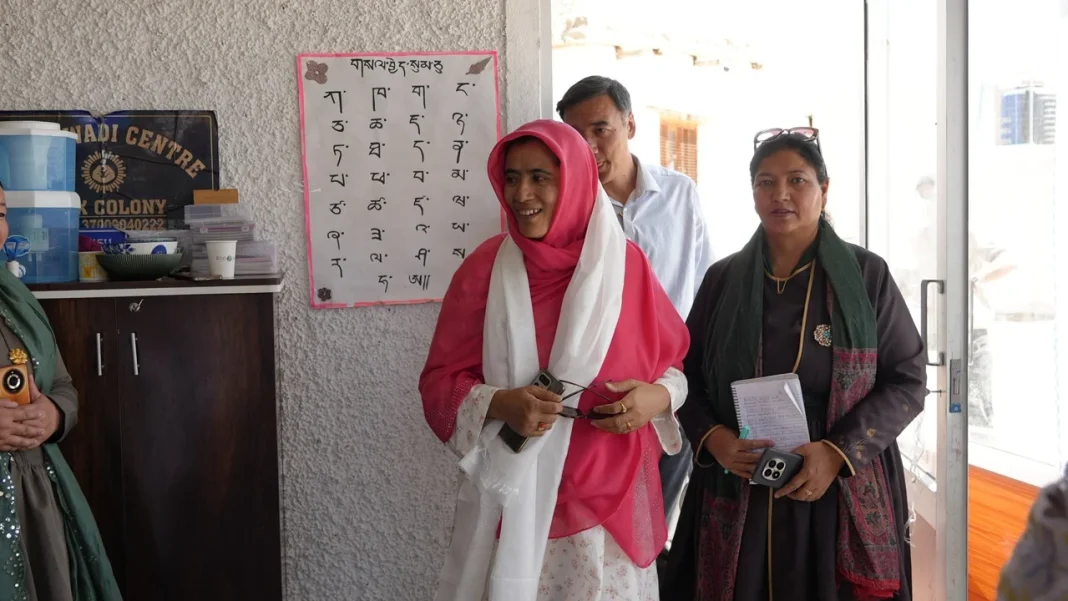
Community scrutiny is another defining feature. Every Anganwadi centre is expected to display day-wise meal information and beneficiary entitlements. Anganwadi Management Committees and Mothers’ Committees can then check menu adherence, meal quantity and quality, while social audits strengthen local oversight. The Ministry of Women and Child Development’s official X post ahead of the launch used the hashtags #PoshanMaah2026, #HamariAnganwadiHamariJimmedari and #LocalKhanaProteinKhana, signalling the campaign’s emphasis on local foods and shared responsibility.
Catch Up On The Stories Everyone’s Watching
What’s Happening Across UP Flood Zones?
Check out how expanded relief efforts are helping nearly 19,500 evacuees as rivers remain above danger levels.
What Earned Scientists Europe’s Top Grants?
Find out how three Indian scientists secured prestigious European research grants for their groundbreaking work.
Can EOS-05 Transform Disaster Tracking?
Uncover how India’s EOS-05 could revisit disaster hotspots every five minutes for faster emergency monitoring.
Which Karnataka Food Units Failed Checks?
Browse the major food safety violations behind Karnataka’s seizure of expired and mislabelled products worth ₹1.38 crore.
Can NEET PG Candidates Check Raw Scores?
Reveal how the new provisional answer key could help candidates compare responses and understand their scores.
Why The 2026 Drive Is More Than A Nutrition Awareness Campaign
Poshan Maah has grown far beyond posters and rallies. In 2025, more than 14.33 crore activities were reported nationwide with participation from over 20 ministries. The 2026 edition adds tighter service-level checks: public menus, meal testing, milestone tracking, referral pathways, PMMVY enrolment and local committee oversight.
That makes the month-long drive especially relevant for families using Anganwadi services. Mission Poshan 2.0 already covers supplementary nutrition for children aged six months to six years, pregnant women, lactating mothers and eligible adolescent girls. The official Poshan Tracker dashboard is also being used for continuous monitoring of services and for identifying stunting, wasting and underweight among children under five.
The Varanasi launch therefore sets up September as a test of delivery, not only awareness. If States and Union Territories carry out the announced measures consistently, families should see clearer meal entitlements, more varied food, closer developmental follow-up and faster maternity benefit processing at the community level.
FAQs
What Is Rashtriya Poshan Maah 2026?
It is the ninth edition of India’s annual September nutrition campaign under Mission Poshan 2.0.
Where Is Poshan Maah 2026 Being Launched?
It is being launched at Rudraksh International Cooperation and Convention Centre in Varanasi, Uttar Pradesh.
How Will Pregnant Women Benefit During Poshan Maah?
Women will receive protein-focused counselling, PMMVY enrolment support, hot meals, and faster benefit verification nationwide.
What Will Anganwadi Centres Do For Young Children?
Children aged zero to three will have developmental milestones recorded, with referrals for detected delays.
How Will Communities Monitor Anganwadi Services?
Anganwadi Management Committees will review services, meals, menus, community participation, and local accountability during September.