
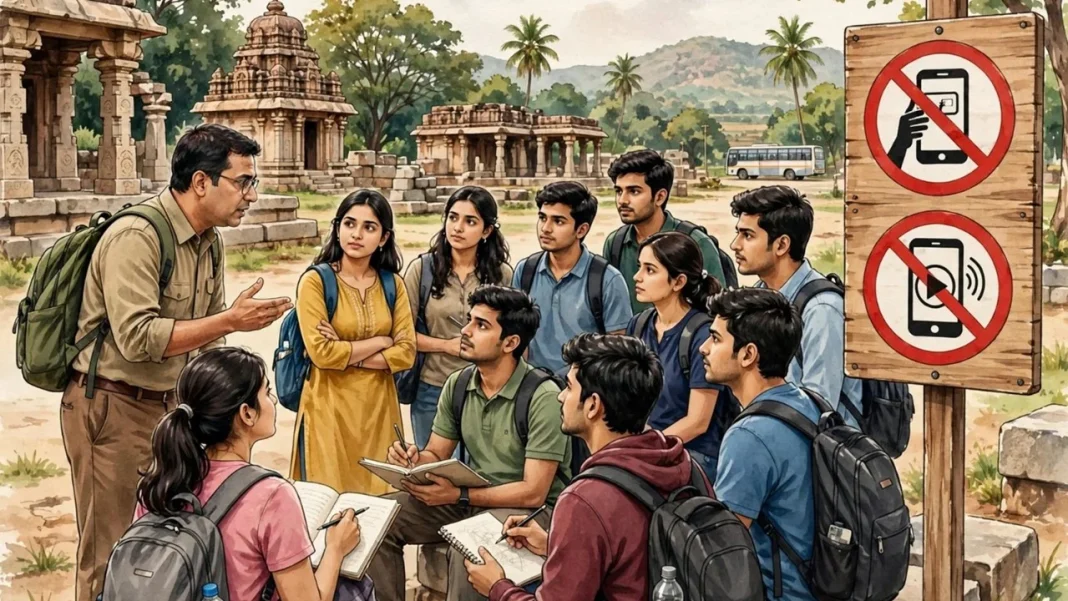

A college trip may look like a break from lectures, but Karnataka has drawn a line around student phone use. The state’s Department of Collegiate Education has told government first-grade colleges to stop students from taking selfies or shooting reels during educational tours, with safety named as the main reason.
The guidelines were issued on September 11, 2026. Tours including travel cannot run beyond five days. Colleges also face tighter rules on parental consent, approved routes, staff supervision, and visits to risky locations. The change is meant to keep students away from dangerous spots or stunts attempted for photos and social-media videos.
Why Karnataka Has Banned Selfies And Reels On College Tours
The rule comes amid concern over accidents linked to students moving close to waterfalls, hills, rivers, sea fronts and other risky locations while taking photos or recording videos. The Department wants educational tours to remain supervised trips rather than turn into opportunities for risky social-media content. The Times of India report said principals must brief students before departure and faculty members must keep watch during the trip.
Once a tour plan is approved, colleges cannot casually change the itinerary or take students to places outside the sanctioned route. The Department has also advised colleges against organising tours during the monsoon, when weather and terrain can add risk.
The main rules now include:
- Selfies and reels are prohibited during educational tours.
- The full trip, including travel, cannot exceed five days.
- Colleges need written departmental approval before organising a tour.
- Student undertakings and signed parental consent must accompany the proposal.
- Local police must receive the tour details and itinerary.
- Trekking or swimming requires certified experts and local safety clearances.
What Colleges Must Do Before Students Leave Campus
The new framework puts more responsibility on college administrations. Written permission from the Department of Collegiate Education is mandatory before a tour is organised. Students must submit undertakings, while parents must give formal consent. The National Portal of India’s Department of Collegiate Education page also links students and institutions to the state department’s official resources.
Staffing has been tightened too. At least one permanent lecturer must accompany a tour, so a group cannot be sent only with guest lecturers. Reports say the teaching team is capped at four members and must include two female lecturers, along with one Group D employee. Colleges must also notify the local police station about the journey and route.
These requirements mean a tour cannot be planned informally and adjusted midway. The approved destination list carries more weight, especially when students are travelling to unfamiliar areas.
Why Waterfalls, Trekking And Swimming Get Extra Attention
Karnataka’s new rules pay particular attention to rivers, sea areas, waterfalls, dense forests and steep hills. These are popular student-tour destinations, but they can become dangerous when people move beyond barriers, climb for a better camera angle, or enter water without trained supervision.
For trekking or swimming, colleges must arrange certified experts and obtain local safety clearances. The News Minute reported that the guidelines also require advance safeguards for risky destinations. That shifts some responsibility from last-minute teacher judgement to preparation before the group reaches the site.
Teachers May Still Face An Enforcement Problem
The toughest part may be monitoring phones in a large group. Bangalore Mirror reported concerns from teachers who said constant supervision could be difficult at crowded tourist locations, stations and public spaces. A ban may be clear on paper, yet enforcing it student by student is another task.
That leaves colleges with a balancing act. They have to prevent risky behaviour without turning every trip into continuous phone checking. Clear briefings, fixed group movement and strict adherence to the approved itinerary may become more useful than simply watching screens.
What The Rule Could Change For Government College Tours
The immediate change is simple: educational tours will now come with more planning and fewer unsupervised detours. Students may also find that trips to monsoon destinations or activity-heavy locations become harder to approve.
For colleges, the larger shift is accountability. Permission, parent consent, police intimation, permanent staff presence and specialist support for high-risk activities all create a documented safety trail. The Karnataka Government’s ban on selfies and reels during government college tours is therefore part of a wider set of controls, not a stand-alone social-media rule.
For students, the practical message is clear. Phones may still travel with them, but creating selfies or reels during the official tour can fall outside permitted activity.
FAQs
1. Who does the selfie and reels ban apply to?
It applies to students joining educational tours organised by Karnataka government first-grade colleges under guidelines.
2. How long can a government college educational tour last?
The complete educational tour, including travel time, can now last no more than five days.
3. Is parental consent compulsory before the educational tour?
Yes, students need undertakings and signed parental consent submitted with the college’s tour proposal documents.
4. Can students go trekking or swimming during these tours?
Yes, but certified experts and local safety clearances must be arranged before participation begins safely.
5. Why did Karnataka introduce the ban on reels and selfies?
The state cited student safety, particularly risks from locations and risky behaviour while filming content.
Five Major India Developments
Which Jobs Are Offered Today?
Check out the departments hiring through the 20th Rozgar Mela.
What Could India’s Climate Talks Bring?
Find out which environmental policies could come under discussion.
Could Qdenga Transform Dengue Prevention?
Uncover how India’s expected 2027 dengue vaccine could change prevention.
How Will Sagar Manthan Strengthen Research?
Explore how India’s new vessel could advance deep-sea missions.
Which Pune Trains Face Disruptions?
See which trains face cancellations and schedule changes during the railway block.