

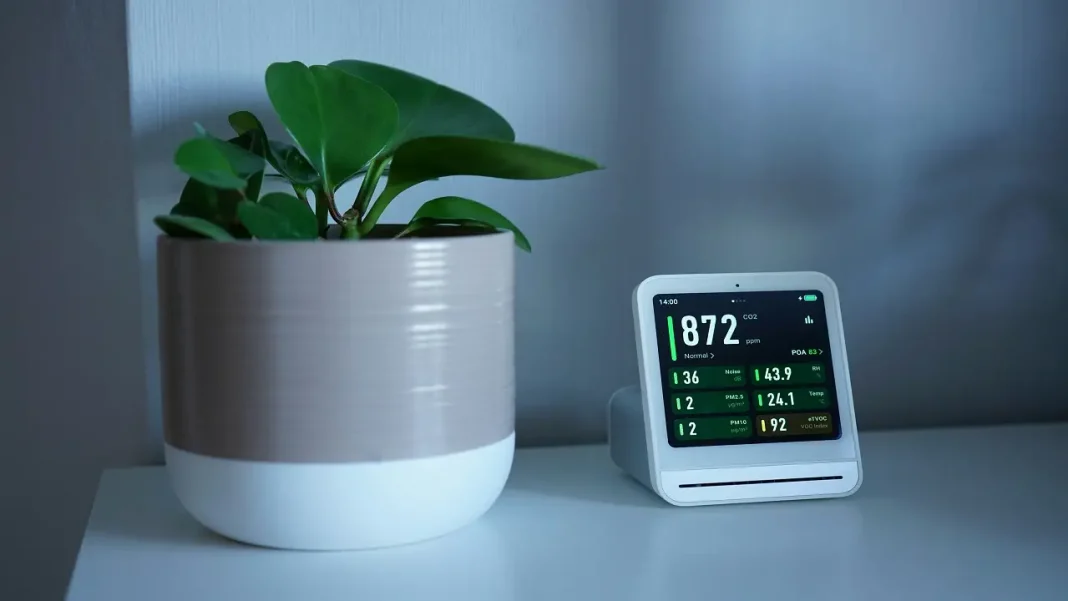

To check the air quality index in an Indian city, open the Central Pollution Control Board’s AQI dashboard or Sameer app, select the location, and check the monitoring station and update time. Read the category alongside the number.
An AQI score and a PM2.5 concentration describe different things. Confusing them, or reading yesterday’s screenshot as today’s air quality, could lead to the wrong decision about outdoor activity.
Key Highlights
- India’s AQI scale has six categories, from Good to Severe.
- Sameer provides hourly updates of CPCB’s National AQI.
- PM2.5 concentrations are measured in µg/m³; AQI is an index without that unit.
- Check local readings and health advice before planning outdoor exertion.
How to Check Air Quality Index on CPCB and Sameer
Use the CPCB National AQI dashboard or the official Sameer app.
On the dashboard:
- Select the state and city.
- Choose a monitoring station relevant to the area.
- Check the displayed date and time.
- Read the AQI category and prominent pollutant.
Sameer’s hourly updates offer another way to follow the information on a phone. An hourly refresh does not mean every pollutant value represents only the preceding hour.
Location is worth checking closely. In its 4 November report from Dhaula Kuan on X, ANI cited an AQI of 417 for that area, with visuals recorded at 6:30 am. That is a dated local report, not a permanent reading for every part of Delhi.
For a journey across the city, compare available station readings near the places involved rather than treating one city number as a street-level measurement.
India’s AQI Categories and PM2.5 Breakpoints
The CPCB’s National AQI framework uses the following bands. The PM2.5 column shows its corresponding 24-hour concentration range.
| AQI Category | AQI Range | PM2.5 Concentration, µg/m³ |
| Good | 0–50 | 0–30 |
| Satisfactory | 51–100 | 31–60 |
| Moderately polluted | 101–200 | 61–90 |
| Poor | 201–300 | 91–120 |
| Very Poor | 301–400 | 121–250 |
| Severe | 401–500 | Above 250 |
These are Indian AQI breakpoints. Check the scale used by an app before comparing its number with CPCB.
The PM2.5 column does not independently determine the overall AQI when another pollutant produces a higher sub-index. Nor should a category label be treated as an individual medical assessment.
PM2.5 Levels and AQI Scores Are Different
PM2.5 refers to fine particles measuring 2.5 micrometres or less in diameter. Its concentration indicates how much particle mass is present in a volume of air.AQI converts pollutant concentrations into index values. The highest relevant pollutant sub-index determines the overall score.
CPCB provides a useful example: PM2.5 at 45 µg/m³ corresponds to a PM2.5 sub-index of 75. It does not mean AQI 45. If another measured pollutant has a higher sub-index, the overall AQI would be higher than 75.
A screenshot also needs its averaging period. PM2.5 breakpoints use a 24-hour average, so an updated display should not be read as an instantaneous personal exposure measurement.
Health Precautions During High AQI
The National Centre for Disease Control’s air-pollution advisory recommends reducing exposure as air quality worsens. Children, older adults, pregnant women and people with existing heart or lung conditions need particular care.
Practical precautions include:
- Avoid outdoor physical exertion during Poor air quality; follow stricter advice as conditions worsen.
- At Very Poor or Severe levels, vulnerable people should remain indoors and keep activity low.
- Avoid exercising beside heavy traffic or construction dust.
- Follow prescribed treatment and keep necessary medicines available.
Indoors, avoid adding smoke from tobacco or burning incense in closed rooms. If using an air purifier, follow maintenance instructions and avoid ozone-generating models.
Seek medical advice promptly for breathlessness, wheezing, or chest discomfort. Worsening symptoms need immediate attention.
Check the latest CPCB readings before heading out, and follow India Focus Daily for verified pollution alerts and local advisories.
FAQs
Which official app shows AQI in Indian cities?
Sameer is CPCB’s app for National AQI updates. It provides hourly information and also allows users to register and track complaints related to local air pollution.
Why do two AQI apps show different numbers?
Check whether both show the same station, timestamp and AQI scale. A city summary and a local station reading should not automatically be treated as equivalent.
Does PM2.5 at 60 µg/m³ mean AQI 60?
No. Under CPCB’s framework, that concentration corresponds to a PM2.5 sub-index of 100. The overall AQI may be higher if another pollutant has a worse sub-index.
Are cloth masks enough during high pollution?
NCDC does not recommend cloth or scarves as effective protection. Its advisory identifies properly fitted N95 or N99 masks as an option, alongside limiting pollution exposure.
Does missing AQI data mean the air is clean?
No. Missing or insufficient data cannot establish clean air. Check another relevant station with available readings and note its location and timestamp before interpreting the result.
Explore More Air Pollution News and Health Updates!
1. What Triggers Delhi’s GRAP Stage 1?
Check out Delhi’s 2026 air pollution restrictions and what they mean for residents.
2. How Does Lucknow Compare With Indore?
See how Lucknow’s clean-air survey examines PM10 pollution and compares with Indore.
3. How Is Mumbai Fighting Climate Threats?
Explore Mumbai’s climate action plan addressing flooding, extreme heat and air pollution.
4. Do HEPA Air Purifiers Really Work?
Find out how HEPA filters work and what to check before buying an air purifier.
5. How Can You Download Your PUC?
Check out how to verify your vehicle’s PUC certificate status and download it online.