

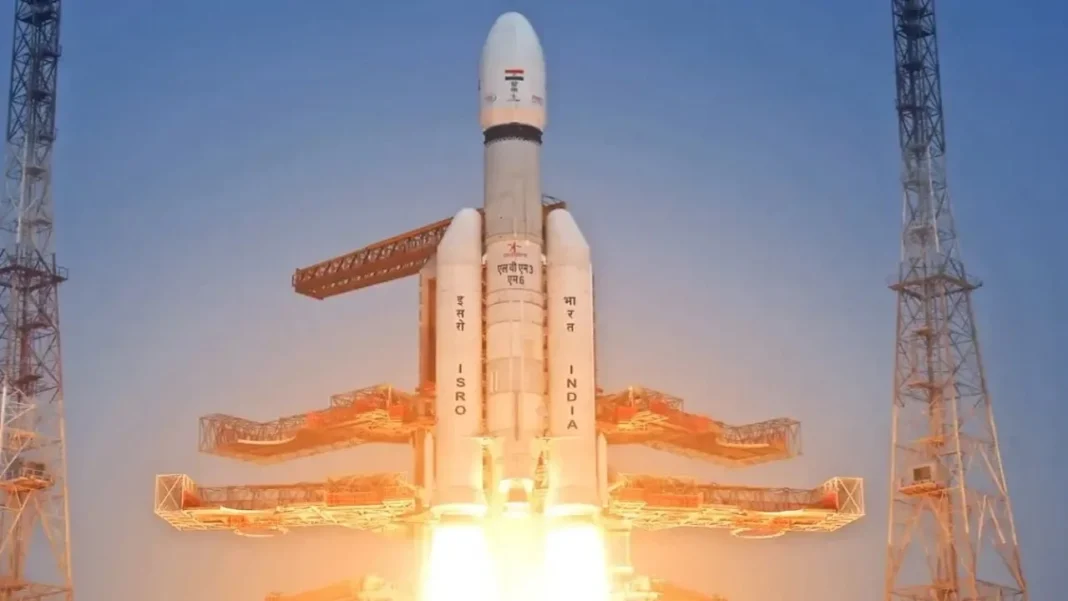

India’s next navigation launch is turning into one of ISRO’s most closely watched missions of 2026. NVS-03, the third spacecraft in the second-generation NVS series, is being prepared for launch on GSLV-F18 from Sriharikota. Reports currently point to a window between October 15 and 20, although ISRO has not yet published a final launch date. That detail is important because NavIC, India’s home-grown navigation system, is presently short of the minimum number of operational satellites needed for standalone positioning
The July 29 Parliament update on NavIC said only IRNSS-1B, IRNSS-1I and NVS-01 were then available for full positioning, navigation and timing services. Four operational satellites are needed for a basic independent position fix. Timing service continues, and users can still work with multi-constellation receivers, but NavIC by itself cannot currently deliver standalone positioning.
Why NVS-03 Has Become Urgent for India’s NavIC Network
NVS-03 is not simply another scheduled satellite. It arrives after a difficult stretch for the constellation. Older IRNSS spacecraft have reached or approached the end of their mission lives, while NVS-02, launched in January 2025, never became operational in its intended orbit.
ISRO’s February 2026 NVS-02 review found that the spacecraft reached its transfer orbit correctly, but the orbit-raising engine could not be fired because a drive signal did not reach the oxidizer-line pyro valve. The agency later listed NVS-02 as not operational. That left NVS-01 as the only working second-generation NVS satellite.
For readers tracking the mission, the key points are:
- NVS-03 is ready for launch, according to the government’s July 2026 Parliament reply.
- Current reports place the launch between October 15 and 20, 2026, aboard GSLV-F18.
- The mission is expected to fly from the Satish Dhawan Space Center at Sriharikota.
- NVS-04 and NVS-05 are already in advanced stages of realization.
- ISRO says the NVS series is meant to replace or augment aging NavIC spacecraft.
NVS-02 Changed the Stakes
The NVS-02 setback explains why this October mission carries unusual weight. Its launch vehicle worked as planned, yet the satellite could not raise itself into the final orbit. ISRO’s review committee recommended changes to improve pyro-system redundancy and reliability, and the agency says those corrective measures were later demonstrated successfully on the CMS-03 spacecraft in November 2025.
What NVS-03 Adds to the Second-Generation NavIC System
NavIC was designed as a seven-satellite regional constellation serving India and an area extending roughly 1,500 kilometres beyond the Indian landmass. Its services include an open Standard Positioning Service and an encrypted Restricted Service for authorised users. ISRO’s official NavIC navigation overview also describes it as India’s independent regional navigation system.
The newer NVS family — NVS-01 through NVS-05 — brings upgrades meant to improve continuity and widen adoption. One of the biggest changes is the additional L1 navigation signal. Earlier NavIC operations were centred on L5 and S-band signals, while L1 support makes integration easier for a wider range of consumer and commercial receivers.
NVS-01 also carried an indigenous atomic clock, a major step because navigation satellites depend on extremely accurate timekeeping to calculate distance and position. NVS-03 is part of the same second-generation programme, built to strengthen the base constellation rather than merely add spare capacity.
The wider push is already visible beyond launch pads. A recent government update on NavIC applications says NavIC is being integrated into real-time train tracking, power-grid synchronisation, Aadhaar geo-tagging and compatible mobile chipsets. Other official updates point to vehicle tracking and fishing-vessel support. Those uses give constellation reliability a direct connection to transport, communications, timing and public infrastructure.
Why One Successful October Launch Will Not Finish the NavIC Rebuild
If NVS-03 reaches its intended operational orbit and enters service, it could restore the minimum four-satellite geometry needed for standalone positioning. That would be a major recovery step, but it would not mean the NavIC refresh is complete.
Satellite navigation works best with redundancy. More healthy spacecraft improve availability when one satellite is under maintenance, reaches end of life or develops a technical problem. That is why the government’s confirmation that NVS-04 and NVS-05 are in advanced realization is just as important as the NVS-03 countdown.
The October mission also arrives during a busy period for ISRO. GSLV-F17 launched EOS-05 on September 4, 2026, and NVS-03 is set to follow on another GSLV mission. For NavIC, though, the test is bigger than liftoff. The spacecraft must reach its assigned orbit, complete checks and begin dependable navigation broadcasting.
Until ISRO issues the final mission announcement, the reported October 15–20 window should be treated as a target rather than a fixed date. What is already clear is why NVS-03 is getting attention: India’s independent regional navigation system needs another healthy positioning satellite in orbit, and this mission is next in line to provide it.
FAQs About ISRO NVS-03 and NavIC
When is ISRO expected to launch NVS-03?
Reports indicate October 15–20, 2026 as target, though ISRO has not confirmed it yet.
Which rocket will launch NVS-03?
NVS-03 is expected to fly aboard GSLV-F18 from the Satish Dhawan Space Centre at Sriharikota.
What happened to the NVS-02 satellite?
NVS-02 reached transfer orbit, but a propulsion-system issue prevented its planned orbit-raising maneuvers after launch.
India’s Space Future Is Taking Shape
What Could ISRO And ESA Explore?
Check out what the extended India-Europe space partnership could bring.
When Will NVS-03 Reach Orbit?
Find out what the upcoming NavIC satellite launch means for navigation.
Will Private Firms Build ISRO Hardware?
Uncover how private-sector expansion could affect rocket and satellite manufacturing.
What Will EOS-05 Do?
See how India’s new Earth-observation satellite could support monitoring.
How Will NETRA Protect Satellites?
Dive into the advanced radar project planned near Guwahati.