

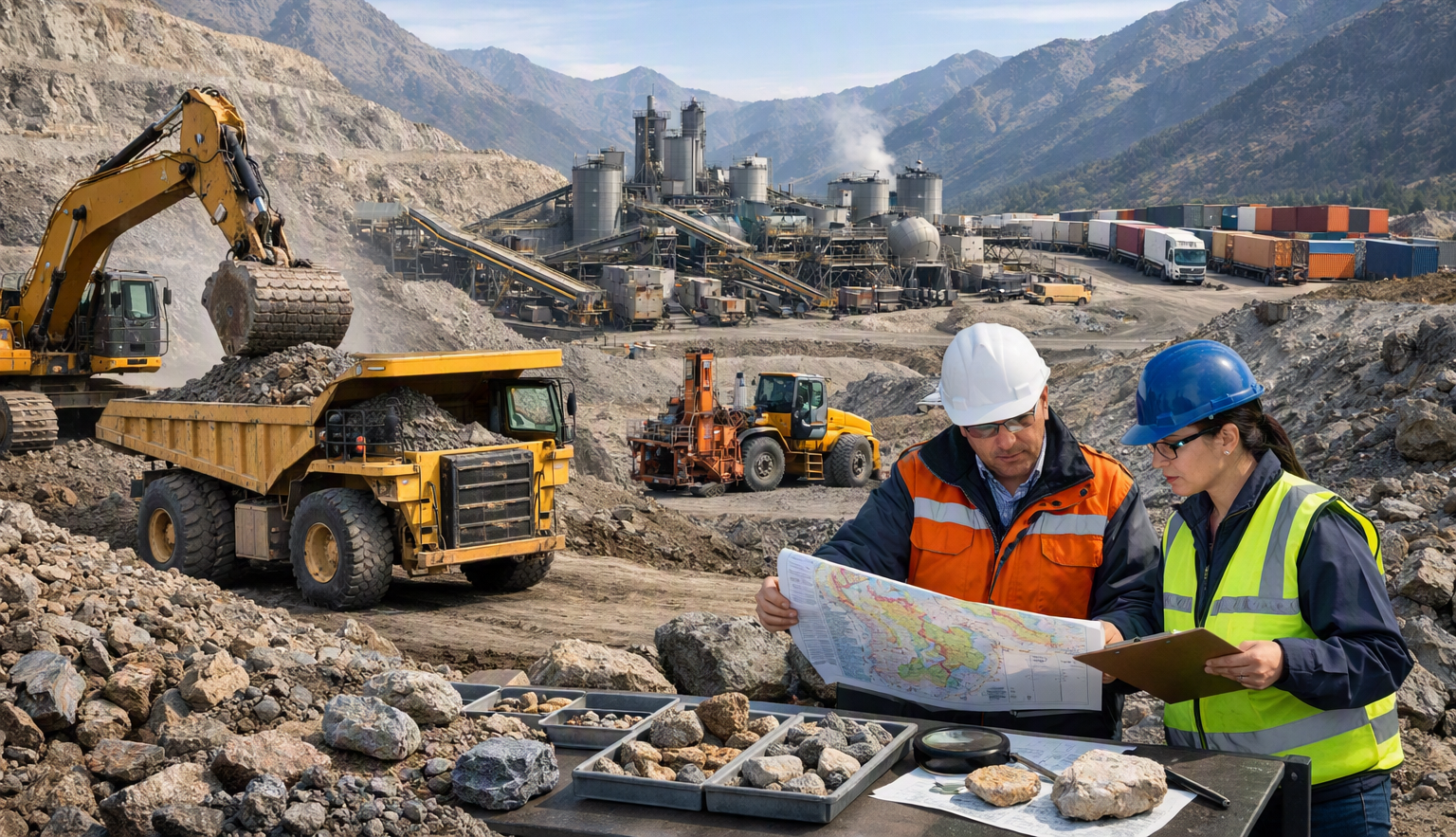

India’s search for rare earths has moved closer to home. At an India-Myanmar mining forum in Mandalay on July 22, Indian Ambassador Abhay Thakur said cooperation had gained momentum after two Indian delegations visited Myanmar in December 2024 and February 2026. Companies including IREL, NTPC Mining, Himadri Specialty, Oceanic Sands and PrNd Metal & Magnets joined the forum.
The push follows Prime Minister Narendra Modi’s June 1 talks with Myanmar President U Min Aung Hlaing in New Delhi, where rare earths were listed among the areas for deeper cooperation. For India, the aim is not a sudden break from China. It is an attempt to add another source for minerals used in electric vehicles, wind turbines, electronics and defence equipment.
What Changed At The Mandalay Mining Forum?
The Mandalay meeting turned earlier diplomatic discussions into direct contact between miners, processors, investors and officials. Thakur described the opportunity as beneficial for both countries, linking India’s mineral demand with Myanmar’s need for investment and more sustainable mining. The presence of Indian public and private companies also suggests New Delhi is studying several stages of the chain, from exploration and samples to processing and magnets.
Reuters reported in September 2025 that the Ministry of Mines had asked IREL and Midwest Advanced Materials to examine rare-earth samples from Kachin Independence Army-controlled mining areas. The latest forum brings the official Myanmar administration into a wider business conversation, but no confirmed long-term supply contract has been announced.
Why Myanmar’s Heavy Rare Earths Attract India
Myanmar is unusually important because Kachin State produces heavy rare earths such as dysprosium and terbium. These elements help permanent magnets perform under high temperatures. Nearly half of the global heavy rare-earth supply is extracted from Myanmar, then much of it moves into China for processing. In 2025, Myanmar supplied 52.8% of China’s rare-earth imports, according to S&P Global Market Intelligence data.
The partnership could offer India four openings:
- Test and secure alternative heavy rare-earth supplies near its northeastern region.
- Build mineral processing links involving IREL and emerging Indian magnet manufacturers.
- Use Myanmar cooperation alongside Quad, US, Australian, Japanese and other mineral partnerships.
- Create investment conditions for traceable mining, transport, refining and recycling projects.
Prime Minister Modi’s official X post after the June meeting specifically named rare earths among the sectors selected for deeper bilateral work.
Can Myanmar Reduce India’s Dependence On China?
Yes, but only at the raw-material end, and not quickly. China held 91% of global rare-earth refining capacity and 94% of sintered permanent-magnet manufacturing in 2024. Even if India buys ore or mixed rare-earth compounds from Myanmar, it still needs separation plants, metal and alloy production, magnet factories, skilled workers and steady power. The IEA rare-earth data shows how wide that industrial gap remains.
Geography creates another problem. India borders Myanmar, but Kachin’s main rare-earth zone lies near China, across mountainous territory with weak transport connections to India. Many mining hubs are controlled by the Kachin Independence Army. Fighting can shut roads, change local control or interrupt shipments without warning. AP reported that the KIA captured Kanpaiti, a major rare-earth trading town on the Chinese border, in late 2024.
Environmental damage also cannot be treated as a side issue. Hundreds of loosely regulated mines have used chemical-heavy extraction methods that contaminate soil and water. Indian buyers would need mine-level traceability, community safeguards, independent audits and waste controls. Otherwise, a supply-diversification policy could create legal, financial and reputational trouble.
What India Must Build Beyond The Myanmar Deal
Myanmar can become a strategic hedge, not a complete replacement for China. India’s stronger route is a portfolio: domestic mining, Myanmar supply, overseas partnerships, recycling and local magnet production. The National Critical Mineral Mission already carries a government expenditure of ₹16,300 crore, with another ₹18,000 crore expected from public-sector companies and other stakeholders over seven years. It targets exploration, overseas acquisition, processing and recovery from end-of-life products.
New Delhi must now connect diplomacy with factories. Sample testing should lead to bankable supply terms. Processing parks need technology partners and guaranteed buyers. Automakers, defence producers and renewable-energy firms should support long-term purchase agreements, while recycling rules should recover rare earths from motors, electronics and industrial scrap.
The India-Myanmar rare-earth partnership can reduce exposure to Chinese supply shocks, but dependence will fall only when India can refine minerals and manufacture magnets at scale. Myanmar may provide the ore. India still has to build the industrial chain.
Frequently Asked Questions
Can Myanmar replace China as India’s main rare-earth supplier?
No. Myanmar can diversify raw-material sourcing, but China still dominates refining, separation, and magnet manufacturing.
Which rare earths make Myanmar important to India?
Dysprosium and terbium support heat-resistant permanent magnets used in EVs, turbines, electronics, and defence systems.
Has India signed a rare-earth supply agreement with Myanmar?
Not yet. Current cooperation covers talks, delegations, sample testing, business meetings, and possible future investments.
Why can’t India simply process Myanmar’s minerals domestically?
India’s separation and magnet-making capacity remains limited, while plants, technology, infrastructure, and expertise require expansion.
What is the biggest risk in the India-Myanmar plan?
Conflict, militia control, weak transport routes, environmental damage, and Chinese pressure could delay dependable supplies.