

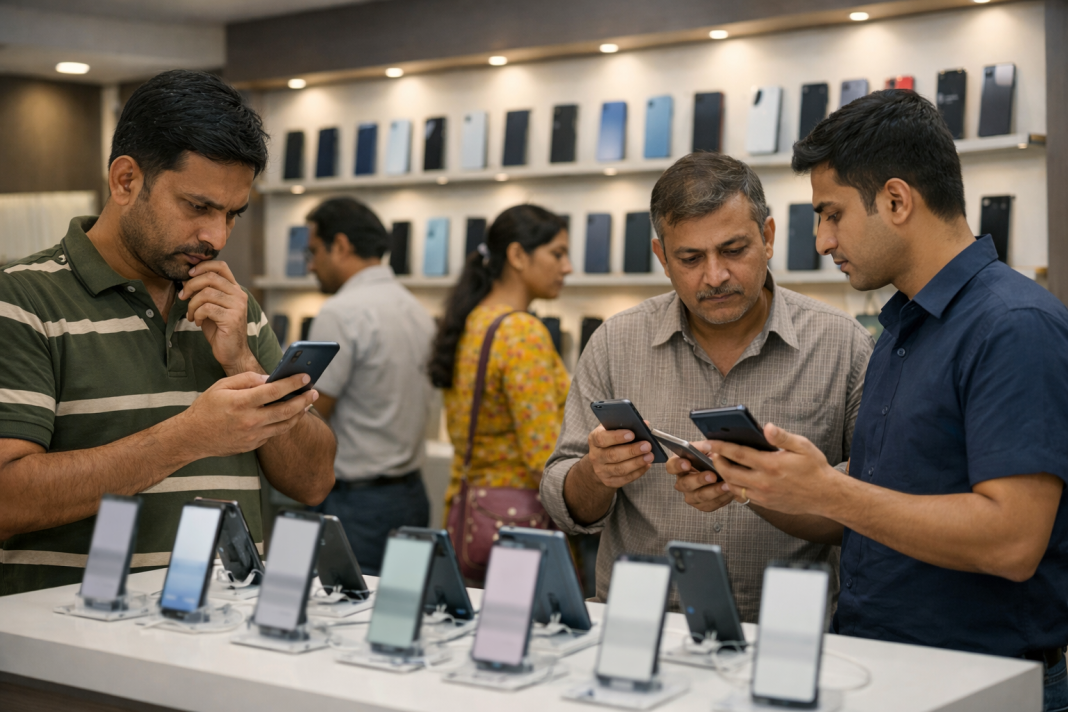

India’s smartphone market has hit a rough patch just when buyers expected cheaper 5G phones and stronger festive offers. Shipments fell 10% year-on-year during April to June 2026, the steepest June-quarter decline in six years, according to Counterpoint Research. Higher prices and weaker spending stopped many shoppers from upgrading.
The headline says smartphone sales dropped, but the reported figure refers to shipments sent into retail and online channels. Even so, the message from the market is hard to miss. Budget buyers are delaying purchases, stretching the life of older phones, and waiting for discounts that may not be large enough this year.
Why Did India’s Smartphone Sales Drop 10% in Q2 2026?
Memory components became much more expensive. Counterpoint said smartphone memory prices had risen nearly four times since September 2025, forcing brands to raise handset prices repeatedly. By the end of June, average phone prices were around 15% higher than before. Inflation, cautious household spending, and longer replacement cycles added to the slowdown.
This pressure had already appeared earlier in 2026. IDC’s first-quarter India report showed shipments falling 4.1% to 31 million units, while the average selling price reached a record $302, up 10.4% year-on-year. Market value still grew because buyers who did purchase often chose costlier models.
The early warning was also visible in Moneycontrol’s official Instagram coverage, which highlighted rising prices and weakening demand as 2026 began.
Key figures from the June quarter include:
- Overall, smartphone shipments fell 10% year-on-year.
- Phones priced below ₹15,000 recorded a 45% shipment decline.
- Average handset prices rose by about 15% during the cost surge.
- Financing supported more than half of mainline smartphone sales.
- Counterpoint expects full-year 2026 shipments to fall around 13%.
Are Budget Phones Becoming Too Expensive for Indian Buyers?
For many households, yes. The sub-₹15,000 category has traditionally served students, first-time smartphone owners, gig workers, and families buying an extra device. A 45% fall in this band suggests that affordability has weakened sharply, not that Indians have suddenly stopped needing phones.
Several models have received repeated price revisions, while brands have reduced discounts or changed specifications to protect margins. A phone that once fitted comfortably inside a ₹10,000 budget may now require an EMI, exchange offer, or a move towards a less powerful 4G option.
IDC found an even steeper collapse in the entry-level segment below $100 during Q1 2026. Shipments in that category fell 59%, and its share shrank from 18% to 8%. At the same time, the $100 to $200 band grew because some buyers were pushed towards higher prices when cheaper models disappeared.
Refurbished phones may gain from this gap. Buyers who need a better camera, more storage, or longer software support can often find an older premium model for the price of a new budget device.
Which Smartphone Brands Are Holding Up Better?
Vivo remained India’s largest smartphone brand in Q2 2026 with an 18% share, although price increases hurt its budget range. Samsung ranked second and became the only top-five company to record growth, with shipments rising 2% year-on-year. Demand for Galaxy A devices, flagship S-series phones, and seasonal promotions helped it perform better than the wider market.
OPPO held a 14% share, while Xiaomi, including POCO, had 13%. Xiaomi and realme both suffered as repeated price increases weakened demand below ₹20,000. Apple shipments fell 3%, despite demand for the iPhone 17 line, because supply constraints limited availability.
Nothing delivered the most eye-catching result. Its shipments jumped 105% year-on-year, helped by the Phone (4a) range and stronger visibility during the IPL. Google Pixel grew 68% in the ultra-premium category.
Will Smartphone Prices Fall Before India’s Festive Sales?
A quick return to older prices looks unlikely. Industry estimates reported by ET Electronics suggest India may ship 130 million to 138 million smartphones in 2026, down 8% to 15% from last year. Analysts also expect average selling prices to keep rising as earlier component contracts expire.
Festive sales could still bring bank discounts, exchange bonuses and no-cost EMI plans. Buyers should compare the final payable amount rather than the advertised discount. A slightly older phone with better storage and longer update support may offer more value than a newly launched model with a higher introductory price.
Frequently Asked Questions
Why did smartphone shipments fall in India?
Rising memory costs, higher retail prices, and cautious spending pushed many buyers to delay upgrades.
Which smartphone price segment suffered the most?
Phones below ₹15,000 suffered most, with shipments dropping 45% year-on-year during the June quarter.
Did every major smartphone brand lose shipments?
No, Samsung grew 2% year-on-year, becoming the only top-five brand to record shipment growth overall.
Are refurbished smartphones becoming more popular?
Yes, rising new-phone prices are pushing value-conscious buyers towards certified refurbished devices with warranties today.
Will festive sales make budget phones cheaper?
Discounts may help, but component inflation could keep final prices above levels seen last year.