

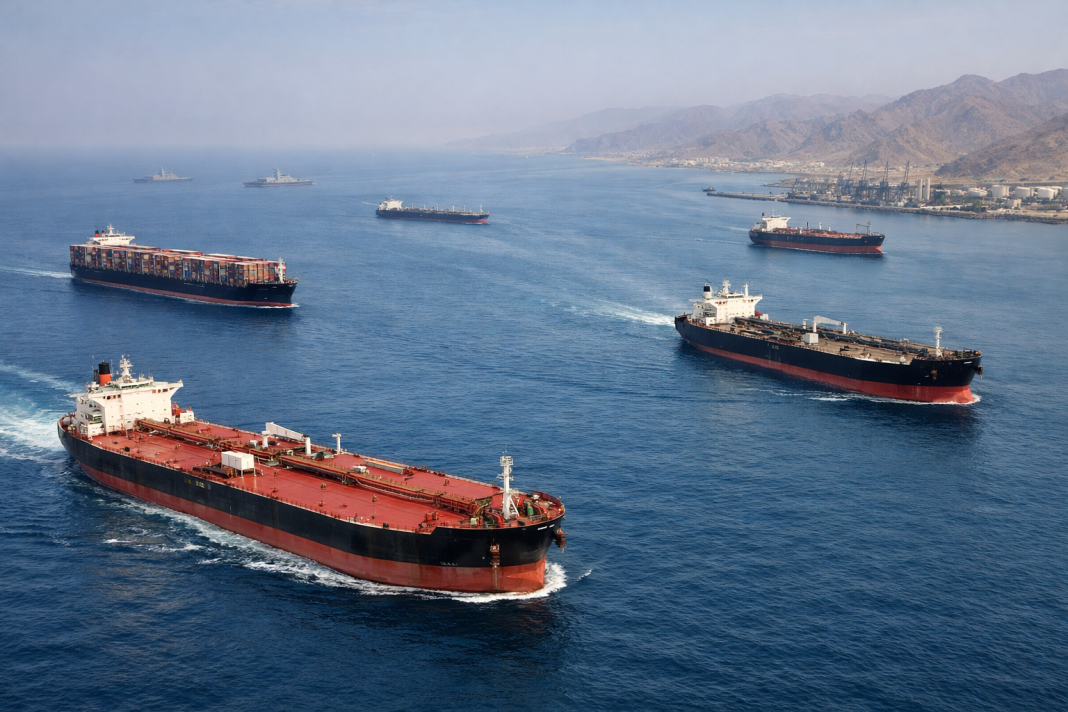

The United States and Iran exchanged another round of strikes across the Gulf on July 18, widening a conflict increasingly centred on the Strait of Hormuz. The attacks hit military sites, transport links, power facilities, and water infrastructure, while commercial shipping through the passage fell sharply. The consequences now extend far beyond both countries, putting oil markets, Gulf security, and Asian supply chains under pressure.
A matching Associated Press report said U.S. Central Command completed a seventh consecutive night of strikes on Iran. Tehran responded with missile and drone attacks aimed at Kuwait, Bahrain, and Jordan. Several Iranian claims about damage to American aircraft and bases remained unverified, while regional governments reported interceptions, injuries, and disruption to airports and essential services.
Key Developments In The U.S.–Iran Conflict
The escalation followed the collapse of an interim ceasefire after months of warfare that began on February 28. Washington says its campaign is intended to reduce Iran’s ability to target ships and military positions. Iran says it is retaliating against attacks on its territory and has warned countries hosting U.S. forces that their facilities may be targeted.
Recent developments include:
- U.S. strikes hit surveillance sites, weapons storage, logistics hubs, bridges, and maritime capabilities.
- Iran launched drones and missiles towards Kuwait, Bahrain, Qatar, Jordan, and other regional locations.
- Kuwait reported damage to desalination, power, and oil facilities, with injuries among response workers.
- The United Nations voiced concern over attacks affecting civilian infrastructure across Iran and neighbouring states.
An official CENTCOM update on X said American aircraft struck Iranian military logistics, underground storage, and maritime systems. Iran’s Revolutionary Guard presented its attacks as a proportional response. The two accounts remain sharply opposed, and independent verification is limited for several claims.
Strait Of Hormuz And Oil Markets Face Renewed Pressure
The Strait of Hormuz connects the Persian Gulf with the Gulf of Oman and the Arabian Sea. The U.S. Energy Information Administration estimated that about 20 million barrels of oil passed through it daily in 2024, equal to roughly 20% of global petroleum liquids consumption. Around one-fifth of the worldwide liquefied natural gas trade also used the route, mainly through Qatari exports.
Traffic has dropped far below normal levels. Reuters shipping data showed only three commodity vessels crossed on Thursday, compared with an average of 125 vessels daily before the war. No very large crude carriers or LNG tankers passed for a second day. Some ships stopped outside the strait or turned back amid Iranian attacks and the renewed U.S. blockade on Iran-linked traffic.
Oil prices climbed more than 4% on Friday to their highest level in over a month, according to Reuters. A prolonged disruption could raise fuel, freight, and manufacturing costs across importing economies. Pipelines through Saudi Arabia and the UAE offer partial relief, but cannot replace all seaborne volumes normally moving through Hormuz.
Regional Security And International Shipping Risks
Kuwait reported attacks on a desalination plant and an oil facility, Qatar activated shelter warnings, Jordan intercepted incoming missiles, and Bahrain sounded air-raid sirens. U.S. strikes also damaged bridges and power-related infrastructure in southern Iran. These incidents increase the chance of escalation involving Gulf states that host American forces but are not formal combatants.
A tanker using the Omani side of the strait suffered minor damage, while ships near Basra, Bandar Abbas, and the Gulf of Oman changed course. Threats involving the Bab al-Mandeb near Yemen add concern because disruption there could affect Red Sea access to the Suez Canal. Iraqi plans for pipelines towards Syria and Türkiye show how governments are seeking alternatives, though such projects will take time.
Why India Is Watching Energy Routes And Chabahar
India has substantial exposure to any Hormuz disruption. Reuters analysis reported that the country imports about 90% of its oil and half of its gas. More than 40% of India’s crude imports were linked to the Strait when the war began. Refiners have since increased purchases from Russia, Africa and Latin America; Russian deliveries reached about 2.70 million barrels per day in June.
Chabahar Port is another concern. U.S. strikes collapsed a surveillance tower there, but India’s Ministry of External Affairs said the India-managed Shahid Beheshti terminal was not damaged. The MEA clarification is significant because Chabahar supports Indian access to Afghanistan and Central Asia without crossing Pakistan. India signed a ten-year operating contract in 2024, although sanctions and nearby military activity complicate planning.
For New Delhi, the priorities are stable fuel supplies, safe sea lanes, protection of Indian sailors and continued access to Chabahar. Diplomatic de-escalation would reduce costs for India, Gulf economies and global importers. Until then, shipping decisions and energy prices will remain tied to events around Hormuz.
Frequently Asked Questions
Why Did The U.S.–Iran Conflict Escalate Again?
The escalation followed the collapse of an interim ceasefire and renewed attacks on shipping routes.
Why Is The Strait Of Hormuz Important?
It carries roughly one-fifth of global oil flows, making disruptions costly for importing economies worldwide.
How Have Oil Markets Reacted?
Oil prices rose as traders assessed falling vessel traffic, damaged infrastructure and possible supply shortages.
How Could The Conflict Affect India?
India faces higher import costs, shipping delays, currency pressure and risks to Gulf-linked trade routes.
Was India’s Chabahar Terminal Damaged?
India’s Shahid Beheshti terminal remained undamaged, according to the Ministry of External Affairs on Friday.