

Jammu and Kashmir is preparing for a cinema first. The International Film Festival of Jammu & Kashmir 2026, or IFFJK, will run from September 7 to 10 under the theme “Rang-e-Cinema”, bringing 135 selected films from 41 countries to Srinagar, Jammu and Gulmarg. More than 1,100 entries arrived from over 80 countries before the final selection.
For a region that has appeared on Indian screens for generations, the festival turns the camera around. This time, Kashmir is not simply a location. It is the host. Organisers want IFFJK 2026 to create space for filmmakers, local artists, visiting delegates and audiences while pushing film tourism and international creative exchange. The official IFFJK 2026 website describes the festival as a platform connecting international storytelling with Jammu and Kashmir’s cultural landscape.
What Is Planned For IFFJK 2026?
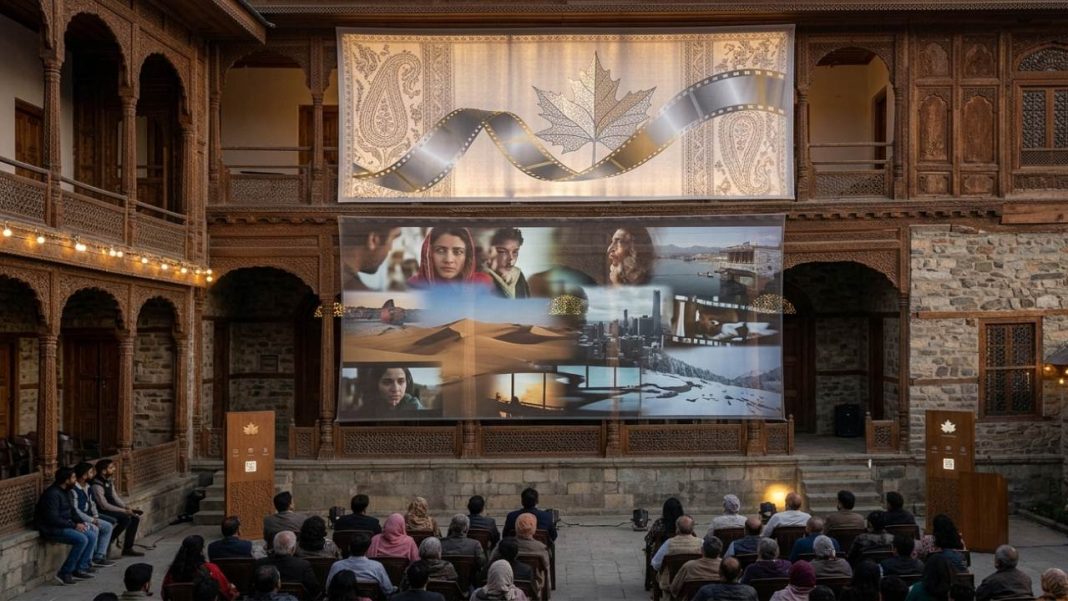
The festival is being organised by the Directorate of Information and Public Relations, Jammu and Kashmir. Its programme includes international competition films, Bharat Panorama, Jammu & Kashmir Select, documentaries, shorts and curated screenings. Events are scheduled at SKICC and a multiplex in Srinagar, alongside venues in Jammu and Gulmarg.
India accounts for 64 selected films, followed by France with 13 and Iran with eight. Argentina and Spain have four each, while Brazil, Germany, Russia and the United States have three apiece. South Korea, Sweden, Taiwan, Qatar, Colombia and Türkiye are among the other participating countries.
Key festival highlights include:
- 135 films selected from more than 1,100 submissions received from over 80 countries.
- A five-member jury featuring Santosh Sivan, Resul Pookutty, Dorothee Wenner, Keiko Bang and Himansu Sekhar Khatua.
- A ₹96 lakh prize purse across nine categories, with ₹25 lakh for Best Film.
- A proposed floating screen on Dal Lake for visitors watching from Shikaras.
- Industry sessions involving names including Vidhu Vinod Chopra, Namrata Rao and Baylon Fonseca.
Why Could The Festival Be Bigger Than A Four-Day Film Event?
Kashmir already has a long screen history. Hindi films including Kashmir Ki Kali, Kabhi Kabhie, Highway and Raazi used the Valley’s mountains, lakes and towns as memorable settings. Yet cinema-going inside the Valley was interrupted for decades. Srinagar’s first multiplex opened in September 2022, bringing commercial cinema exhibition back after a long gap.
IFFJK also follows the Jammu & Kashmir Film Policy 2024, which introduced a single-window system for film permissions and sought to attract Indian and international productions. The policy connects filmmaking with jobs, investment, local talent and tourism. A festival drawing foreign filmmakers into the region gives that policy a visible public stage.
That makes the timing notable. Kashmir is trying to move from being a scenic backdrop chosen by outside productions to becoming a place where films are screened, judged, discussed and potentially developed.
Can Rang-e-Cinema Turn Film Tourism Into A Wider Creative Economy?
The proposed floating cinema on Dal Lake will probably attract the most photographs, but the commercial opportunity goes further. Festivals bring producers, cinematographers, writers, editors, distributors and location scouts into the same place. If visiting professionals return for shoots, workshops or collaborations, hotels, transport operators, technicians, craftspeople and local crews could benefit.
The ₹96 lakh awards give IFFJK competitive weight. Best Director and Best Debut Film of a Director carry ₹15 lakh each, while J&K Select offers ₹10 lakh for the best regional-linked film. Acting awards carry ₹8 lakh each, and cinematography, sound design and editing have ₹5 lakh prizes apiece.
DIPR is also promoting the event online. An official DIPR post on X announced the nine cash-prize categories and September 7–10 schedule, while the official IFFJK account has been sharing countdown and filmmaker updates. That digital push can take the festival beyond its physical venues before opening day.
Could IFFJK Put Kashmir On The Global Cinema Map?
One festival cannot create an international film centre by itself. The harder test comes later: whether overseas filmmakers return, local creators gain work, annual editions improve, and film permissions stay fast enough for production schedules.
Still, IFFJK 2026 starts with scale. Forty-one participating countries, an international jury, prominent Indian film professionals, regional programming and an instantly recognisable destination give the first edition more than ceremonial value. If the festival becomes annual and continues attracting credible films and industry participation, Kashmir could build a festival identity alongside its older reputation as a shooting location.
The Valley has spent decades appearing on cinema screens. From September 7, it gets a chance to join the international cinema conversation in a different role.
FAQs
When Will IFFJK 2026 Be Held?
IFFJK 2026 runs September 7 to 10, with events across Srinagar, Jammu and Gulmarg venues.
How Many Films Will Be Screened At IFFJK 2026?
The inaugural festival selected 135 films from 41 countries after receiving over 1100 global submissions.
What Is The Prize Money At IFFJK 2026?
Organisers announced ₹96 lakh across nine categories, including a ₹25 lakh award for Best Film.
Will There Be A Floating Cinema On Dal Lake?
Yes, organisers plan a floating Dal Lake screen for visitors travelling by Shikara during screenings.
Why Is IFFJK Important For Kashmir?
It could attract filmmakers, support local talent, promote tourism and raise Kashmir’s international cinema profile.