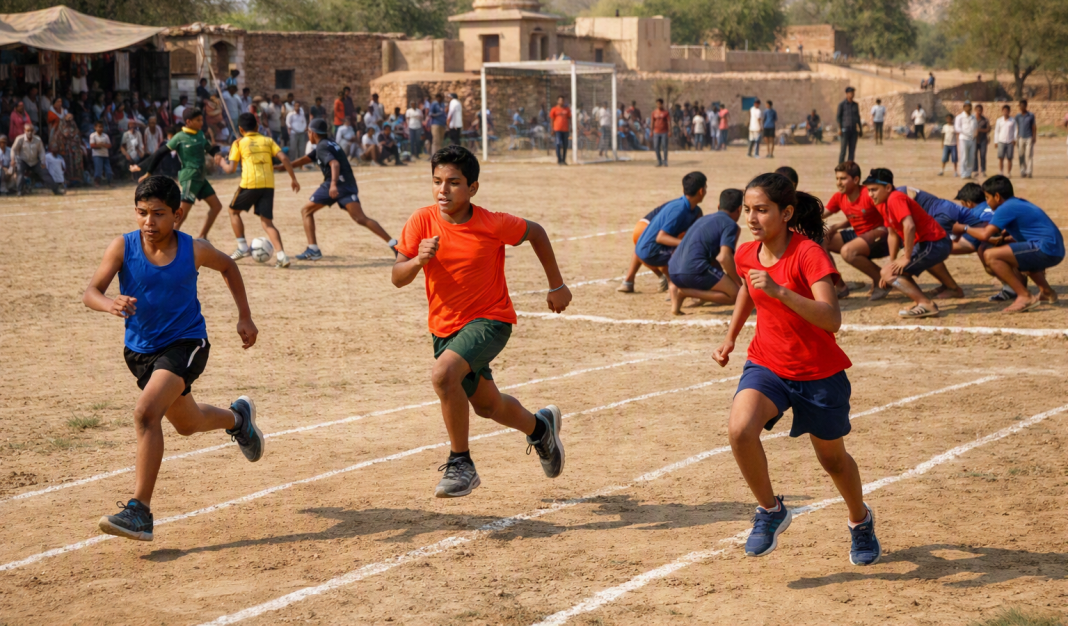

A two-day village tournament has placed rural Rajasthan at the centre of India’s grassroots sports conversation. On 1 and 2 August 2026, nearly 29,000 children and teenagers competed across 66 locations in 15 districts under the sixth AU Bano Champion Village Level Sports Tournament.
The scale is striking, but the bigger story lies beyond attendance. Young athletes aged 8 to 17 were given local competition, visible selection routes and a chance to move from village contests towards district and state championships. For families living far from major stadiums, that pathway can turn sport from an occasional school activity into a serious option.
What Happened Across 66 Rajasthan Locations?
The official tournament release said events were staged across districts including Jaipur, Ajmer, Jodhpur, Sikar, Jhunjhunu, Alwar, Tonk, Pali, Jalore and Dausa. The open format also allowed children beyond the programme’s regular training centres to enter.
Competitions covered several familiar and emerging disciplines:
- Athletics tested speed, endurance and basic competitive readiness.
- Football and volleyball created team-based selection opportunities.
- Boxing and wushu opened routes into combat sports.
- Kabaddi and kho-kho kept indigenous games firmly inside the programme.
Local sarpanches, MLAs, school principals, Sub-Divisional Magistrates and bank teams attended opening events. That presence may help families view organised sport as a supported community activity rather than a distraction from studies. The official Bano Champion Instagram account has also shared camp and tournament updates, giving village athletes wider digital visibility.
How The Bano Champion Pathway Works
The event is not designed as a single weekend spectacle. Village winners move to district-level competition and can later reach state tournaments. Promising participants may also enter structured coaching under the Bano Champion programme.
AU Foundation says the initiative currently supports more than 6,000 athletes who have collectively won over 2,300 medals. Earlier programme updates have highlighted young players reaching Khelo India events and football selection routes. These stories show why regular competition is as important as finding raw talent. A child needs repeated matches, coaching feedback and travel support before performance can improve.
The current model also widens the first selection pool. Instead of asking every talented child to travel to Jaipur or another major city for trials, scouts and organisers bring the initial contest closer to villages. That lowers travel costs and allows parents to watch the process directly.
Why Rural Rajasthan Could Shape India’s Sports Future
India’s national system is expanding at the same time. The Khelo India dashboard lists 1,067 notified centres, 28,214 athletes in training and coverage across 768 districts. A July 2026 government review also reported that more than 63,000 athletes have participated in Khelo India competitions since 2018.
Rajasthan is also planning a wider state pipeline. Its 2026–27 sports push includes Rajasthan Youth Games, proposed block-to-state competitions, new facilities and digital athlete tracking. The Rajasthan Sports Department’s online services already include athlete registration, scheme applications, team management and plans for geo-tagged facility access.
This is where the 29,000-player turnout becomes more than a large number. If village winners enter district databases, receive verified performance records and continue training, rural tournaments can feed state and national systems. Without that follow-through, the event risks becoming a busy annual gathering with limited long-term movement.
What Must Follow After The Tournament?
Rajasthan now needs consistency. Coaches must return after the medals are distributed. Grounds need safe surfaces, drinking water, changing areas and usable equipment. Girls require secure travel and family support. Talented children also need nutrition guidance, injury care and help balancing school with training.
Selection should remain transparent, with timings, scores and match results recorded digitally. The state can connect village events with district academies, Khelo India centres and upcoming Rajasthan Youth Games. Public dashboards could show how many athletes advance, remain in coaching and compete again the following year.
The answer to the headline question is therefore promising, not final. Rural Rajasthan has shown that the player base exists. Building India’s next sports generation will depend on whether 29,000 entries become thousands of continuing athletes, hundreds of district contenders and a steady stream of national-level performers.
Frequently Asked Questions
When was the sixth AU Bano Champion village tournament held?
It was held on 1 and 2 August 2026 across 66 Rajasthan locations in total.
Which age group and sports were included?
Children aged 8 to 17 joined athletics, football, volleyball, boxing, wushu, kabaddi and kho-kho competitions.
What happens to winners after village-level events?
Village winners advance to district tournaments before earning places at the programme’s state-level championships later.
How many athletes does Bano Champion support?
The project says it currently supports over 6,000 athletes who have secured 2,300-plus medals nationwide.
What support can keep rural athletes progressing?
Regular coaching, safe grounds, nutrition, travel funding and transparent selection can keep village talent progressing.