
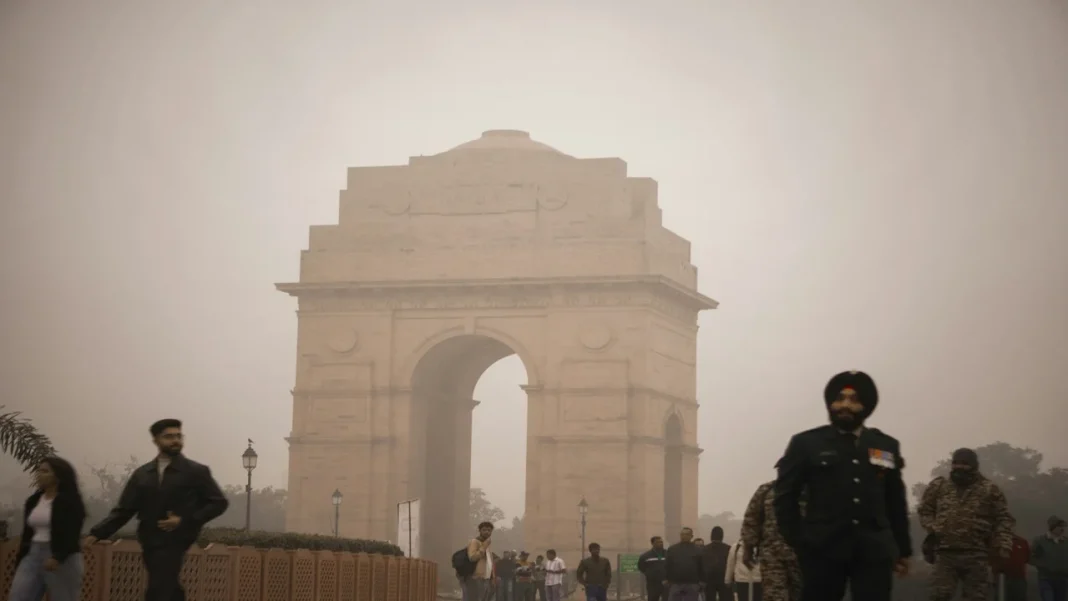

Delhi-NCR is facing a double hit this week: brutal heat and worsening air. While residents are already dealing with scorching afternoons, hot winds, school-run stress, office commutes, and power-load pressure, the Commission for Air Quality Management has now brought back Stage-I of the Graded Response Action Plan across the National Capital Region.
CAQM invoked GRAP-1 on May 19, 2026, after Delhi’s daily average AQI rose to 208, placing it in the “Poor” category. The order applies across the entire NCR with immediate effect, and authorities have been told to tighten checks on dust, waste burning, polluting vehicles, industrial emissions, traffic choke points, and illegal construction-related pollution.
Why GRAP-1 Returned During Delhi-NCR Heat
This is not the usual winter pollution headline. The timing is what has made this update trend across Delhi, Noida, Gurugram, Ghaziabad, and Faridabad. GRAP is mostly associated with winter smog, Diwali smoke, stubble season, and calm winds. This time, it has returned during a punishing May heat spell.
The heatwave backdrop is serious. IMD-linked reports said Delhi-NCR was seeing temperatures around 43°C to 45°C, with warnings for heatwave to severe heatwave conditions. Safdarjung reportedly touched 45.1°C, while Ridge recorded 46.5°C, and an orange alert was issued till May 25.
That explains why this story is trending. People are not just searching “Delhi heatwave today” anymore. They are also searching “GRAP-1 restrictions,” “what is banned in Delhi-NCR,” “are construction activities banned,” “can diesel generators run,” and “what happens to tandoors and roadside eateries.”
GRAP-1 does not mean a lockdown. Schools, offices, markets, metro services, buses, and regular traffic continue. However, it does mean stricter pollution checks, tighter enforcement, and penalties for activities that add dust, smoke, emissions, or open burning.
Full List Of Banned And Restricted Activities
The biggest restriction is on open burning. Burning municipal waste, leaves, biomass, garbage, and other solid waste in open areas is prohibited. CAQM has asked agencies to enforce this strictly and impose environmental compensation on violations as per NGT directions.
Construction and demolition sites are also under scanner. Projects of 500 sqm or more cannot be allowed to operate if they are not registered on the official web portal or if they fail dust-control requirements. C&D material must be stored properly, covered, and transported only in covered vehicles. Anti-smog guns, water sprinkling, and dust suppression must be used at construction and road repair sites.
Illegal dumping is another red flag. Municipal solid waste, C&D waste, and hazardous waste must be lifted regularly from dump sites. Dumping waste in open land areas is not allowed. Landfill and dumpsite fire incidents must also be prevented through stricter vigil.
Polluting vehicles can face action too. Authorities have been told to strictly enforce PUC norms, stop visibly polluting vehicles, and act against overaged diesel and petrol vehicles as per court and statutory orders. Non-destined truck traffic for Delhi must also be diverted through Eastern and Western Peripheral Expressways.
Industries, brick kilns, hot mix plants, and thermal power plants must follow emission norms. Only approved fuels can be used in industries across NCR, including brick kilns and hot mix plants. Violations can lead to closure or legal action.
Firecrackers remain banned as per court and tribunal orders. CAQM has again asked authorities to strictly enforce the ban, which is important because NCR pollution spikes are often linked with festival smoke, local burning, and low-dispersion weather.
Stay updated on heat, air and city changes!
New Delhi Auto Rules Coming Soon?
Check out upcoming EV plans, deadlines and support updates for drivers.
Want To Cut AC Bills?
Find simple ways to reduce electricity costs during extreme heat.
Can Pollution Measures Change Air Trends?
Uncover how city actions may impact Delhi’s changing air quality.
How Is Delhi Air Really Changing?
Look into shifting pollution patterns and what they mean for residents.
Is Mumbai Air Quality Safe Today?
Browse health risks and safety guidance linked to today’s AQI levels.
What Residents Should Do Now
For residents, GRAP-1 brings simple but important rules. Keep vehicle engines tuned, maintain tyre pressure, keep PUC certificates updated, avoid idling at red lights, do not throw garbage in open spaces, and report polluting activities through Green Delhi App, SAMEER App, 311 App, or other local platforms.
Office-goers may also see public messaging around shared commute. CAQM has encouraged offices to start unified commute plans for employees to cut traffic load. Public transport services may be augmented through CNG or electric buses and higher metro frequency.
For daily life, the most practical advice is simple: avoid afternoon outdoor work, keep water handy, use public transport where possible, avoid burning waste, do not idle vehicles, and check official updates instead of relying on WhatsApp forwards.
Social Post And Official Links To Track
NewsOnAIR, the official news service, reported that CAQM issued the Stage-I GRAP order after Delhi AQI reached 208 and air quality entered the poor category. For official documents, readers should check the CAQM website, where the May 19, 2026 GRAP-1 order is listed under “What’s New.” (caqm.nic.in) The PIB release also confirms the 31-point Stage-I action plan and citizen charter.
The key takeaway is clear. Severe heat has made Delhi-NCR uncomfortable, but poor air has now added another layer of public caution. GRAP-1 is not the harshest stage, yet it is a warning signal. If AQI worsens further, stricter stages can follow.
FAQs
1. Why Was GRAP-1 Imposed In Delhi-NCR?
GRAP-1 began after Delhi’s AQI touched 208 and CAQM ordered Stage-I action across NCR immediately.
2. Are Construction Activities Fully Banned Now?
No, but unregistered large sites and dust-control violators can face stoppage, penalties, or legal action.
3. Are Firecrackers Banned Under GRAP-1?
Yes, authorities must strictly enforce court and tribunal orders banning firecrackers across Delhi-NCR areas.
4. Can Diesel Generators Be Used During GRAP-1?
Power agencies must ensure supply so alternate generator use is discouraged during the pollution control phase.
5. What Should Residents Avoid During GRAP-1?
Avoid waste burning, vehicle idling, open dumping, uncovered construction material, and driving visibly polluting vehicles.