

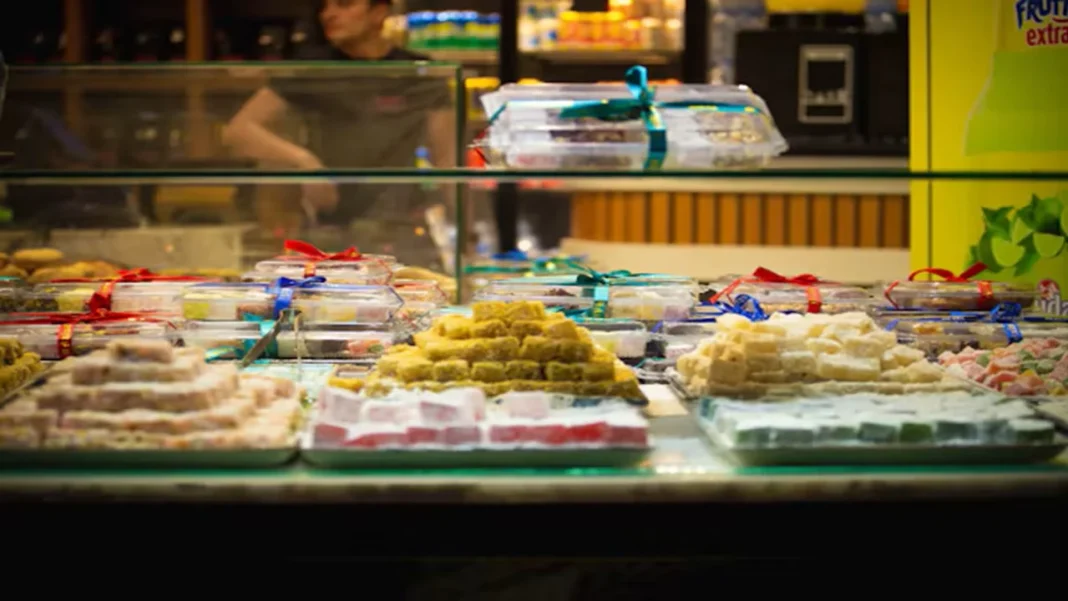

A sour-smelling sweet or a damaged box gives you a reason to stop eating. Unsafe Diwali sweets may have no obvious visual warning. The seller’s details, product dates, and storage conditions need checking; suspected adulteration may require laboratory investigation.
A special festive food-safety and anti-adulteration drive, dated 29 September 2026, appears in FSSAI’s advisory register. Official services let consumers verify businesses and report concerns without depending on forwarded testing videos.
Key Highlights
- The seller’s FSSAI licence or registration needs verification.
- Product dates and storage instructions need to be followed.
- Tasting a suspect sweet cannot establish its safety.
- Purchase evidence supports reports submitted through official channels.
Check the FSSAI Licence Before Buying Diwali Sweets
The number on a shop’s sign or box is a starting point. FSSAI licence and registration numbers contain 14 digits, and the authority provides a public verification facility through FoSCoS.
When checking a seller:
- Match the business name and premises details with the outlet supplying your order.
- Review the licence or registration status shown in the official record.
- Keep an itemised receipt identifying the seller and purchase date.
Verification concerns the business record. It cannot establish that every sweet in a particular batch was prepared or stored correctly. For loose sweets, the displayed best-before information and the seller’s storage advice deserve attention alongside the certificate.
Storage Warning Signs and Shelf-Life Differences
A single storage rule does not cover every mithai. FSSAI’s traditional milk-products guidance gives an illustrative same-day shelf life for kalakand and two refrigerated days from manufacture for products including rasmalai and sandesh.
These examples are guidance, not a guaranteed safe period for every recipe or storage condition. The product’s own instructions remain essential.
| What You Notice | What to Do |
| Mould or an abnormal sour smell | Stop eating; photograph the problem |
| Torn, leaking or poorly sealed packaging | Avoid the product and raise the concern |
| Chilled sweets displayed without suitable cooling | Ask how storage requirements are being maintained |
| Missing dates or unclear storage advice | Resolve those gaps before buying |
Perishable sweets need the storage conditions specified for them during the journey home too. A refrigerated display offers little reassurance if a chilled gift box then spends hours without suitable cooling.
An assorted box may contain sweets with different storage requirements. The shelf life of its dry sweets cannot be applied to the rasmalai packed beside them.
Do not taste a questionable sweet to decide. FoodSafety.gov explains that food can look, smell, and taste normal while still being unsafe.
Why Appearance and Home Tests Cannot Confirm Safety
Bright colour alone does not identify an illegal additive. Nor does an unusual texture establish which ingredient caused it. Spoilage, contamination and adulteration require different investigations; reporting what you observed is more useful than naming an unverified chemical.
FSSAI’s DART booklet provides household checks for some adulterants, but its stated purpose is consumer awareness. A result from one test does not examine every possible hazard in a finished sweet.
For a suspected problem, photographs and purchase details provide a better starting point than repeated experiments on the remaining food. Official sampling and appropriate laboratory analysis can address questions a visual check cannot settle.
How to Report Suspected Food Adulteration
FSSAI’s Food Safety Connect service accepts consumer food-safety concerns through its portal and mobile app. State food-safety authorities are another route.
Before submitting the complaint:
- Photograph the sweets, packaging, and visible defect.
- Note when the sweets were bought or delivered and the outlet’s address.
- Add any available batch details and FSSAI number.
- Describe the problem and upload the bill or order record.
The official complaint FAQs explain online tracking and recommend bills and images as evidence. Retaining the reference number makes follow-up easier.
Do not eat any more of the suspect product. If officials request a sample, follow their instructions about storage and collection rather than altering it through home testing.
Frequently Asked Questions
Can I report sweets ordered through a delivery app?
Yes. Food Safety Connect covers online aggregators and delivery platforms as well as packaged food and premises. Include the order record and identify the supplying outlet.
What if I no longer have the receipt?
A receipt helps support the complaint. Gather any available payment record, packaging photographs, and outlet details, then explain the missing bill when reporting the suspected problem.
Is there a guaranteed complaint-resolution deadline?
FSSAI’s FAQs describe efforts towards timely resolution with state authorities, rather than guaranteeing one deadline for every complaint. The portal allows you to track your submission.
What if someone becomes ill after eating sweets?
Medical care takes priority. Seek a doctor for bloody diarrhoea, dehydration, or vomiting that prevents drinking; a food-safety complaint does not replace assessment of the illness.
What information should accompany a sweet gift box?
Keep the original product label and storage instructions with the gift. Recipients need the remaining shelf life and refrigeration advice, particularly when the sweets require chilling.
Stay Informed With More Festival and Food Safety Updates!
1. When are Diwali 2026 festivals celebrated?
Explore the Diwali 2026 calendar covering Dhanteras, Lakshmi Puja and Bhai Dooj dates.
2. Why did FSSAI target three companies?
Uncover the details behind the FSSAI crackdown on three food companies and their products.
3. Which protein snacks are worth buying?
Discover protein snacks in India and what to check before buying healthier snack options.
4. What went wrong at Blinkit’s warehouse?
5. Why is Karnataka checking expired foods?
See how Karnataka’s expired food safety checks address concerns about outdated food products.