
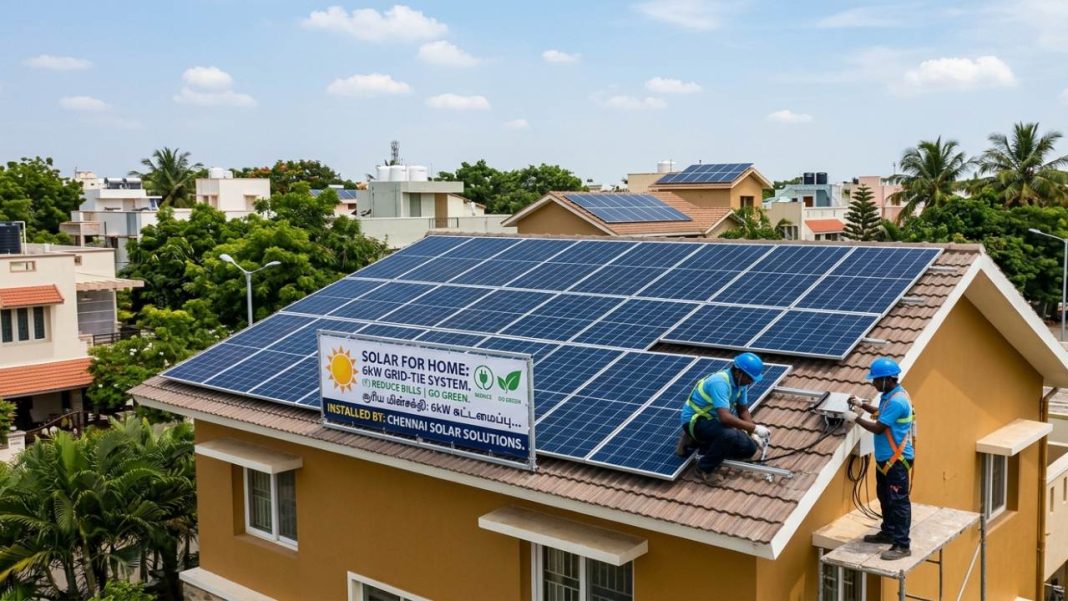

Delhi households that averaged up to 400 electricity units a month in FY 2025-26 are set to get rooftop solar without paying installation costs upfront. The Delhi Cabinet approved the second amendment to the Delhi Solar Energy Policy 2023 on September 1, 2026. Eligible domestic consumers can receive systems of up to 3 kW, subject to rooftop technical feasibility.
The government wants to cover 2.30 lakh homes and add 500 MW of rooftop solar capacity by March 2027. Existing electricity subsidies will continue alongside the new solar benefit.
Key Highlights
- Eligibility uses average monthly electricity consumption of up to 400 units in FY 2025-26
- Eligible homes can receive rooftop solar systems of up to 3 kW at zero upfront cost
- Installation remains subject to technical feasibility of the roof and electricity connection
- Selected vendors must provide operation and maintenance support for five years
- Delhi targets 2.30 lakh rooftops and 500 MW of additional capacity by March 2027
Who Can Get Zero-Cost Rooftop Solar Under Delhi’s Revised Policy?
The zero-upfront offer is for domestic Delhi consumers whose average monthly electricity use did not cross 400 units during FY 2025-26. One low bill alone will not establish eligibility because the specified yearly average is the key test.
The property must also have a suitable roof. Capacity can go up to 3 kW, but roof area, shade, structural conditions and grid connection feasibility can affect installation.
Homes averaging more than 400 units are outside the full zero-upfront category. Reports on the Cabinet decision say a 3 kW system for these consumers can still receive ₹78,000 from the Centre and ₹78,000 from Delhi, leaving about ₹19,000 payable on an estimated ₹1.75 lakh system.
Residents can track updates through the official Delhi Solar Portal and PM Surya Ghar national portal. A dedicated application process for this newly amended Delhi offer had not been separately announced by September 2.
How Will Delhi Make A 2 kW or 3 kW System Free Upfront?
The revised structure combines Central support under PM Surya Ghar with a larger Delhi contribution and a top-up where needed.
For a 2 kW system estimated at ₹1.30 lakh, the reported breakup is ₹60,000 from the Centre, ₹52,000 from Delhi, and an ₹18,000 top-up. That covers the estimated system cost.
For an eligible 3 kW system, the Centre can provide ₹78,000 and Delhi another ₹78,000. A further ₹19,000 top-up is expected to bridge the tendered cost for households qualifying for the zero-upfront offer.
The original Delhi Solar Energy Policy 2023 already included capital subsidy, generation incentives and net-metering benefits. The new amendment directly tackles the large payment households previously faced before installation.
What Happens To Electricity Bills And Solar Earnings?
Delhi says the existing electricity subsidy will continue. Homes using up to 200 units can retain the current full subsidy while also using rooftop solar. Consumers in the 201-400 unit bracket remain covered by the existing subsidy framework.
A 3 kW system is estimated by the government to generate about 300 units monthly. Electricity used at home can reduce grid purchases, while excess power can be exported through net metering. Policy reports place payment for exported electricity at about ₹6.50 per unit under the applicable average power purchase cost.
The selected vendor must also operate and maintain the system for five years. Afterward, consumers may choose maintenance and insurance support through their discom or empanelled agencies.
ANI’s official X account carried video from Chief Minister Rekha Gupta’s September 1 press conference, where she linked the policy change to removing the upfront-cost hurdle for households.
How Will The Solar Scheme Be Rolled Out Across Delhi?
The programme will follow a utility-led aggregation model. Indraprastha Power Generation Company Limited is expected to select vendors through competitive bidding and coordinate installations, vendor management and grievance handling. Residential application and registration charges have also been reported as waived.
The move comes while PM Surya Ghar is expanding nationally. An August 4 Ministry of New and Renewable Energy update said more than 50 lakh households had benefited, while nearly 19 lakh had received zero electricity bills during at least one billing period.
For Delhi households, the useful first step is to review electricity consumption history and roof suitability, then wait for the notified application route. Applications should be made through government or discom channels rather than unofficial agents promising faster installation.
FAQs
Can tenants get the zero-cost rooftop solar system?
Only eligible domestic consumers with suitable rooftop access can qualify under the announced technical conditions.
Is every Delhi household using below 400 units automatically eligible?
No, eligibility depends on FY 2025-26 average consumption and rooftop technical feasibility checks being completed.
Will the existing Delhi electricity subsidy stop after solar installation?
No, the government says eligible households will continue receiving the electricity subsidy after solar installation.
How long will free maintenance be provided for the solar system?
Selected vendors must provide operation and maintenance support for five years after the system installation.
Where should Delhi residents apply for the revised solar benefit?
Residents should use official Delhi Solar or PM Surya Ghar channels when applications open publicly.