

CBSE’s new language framework has put the current Class 6 batch at the centre of a fast-moving court case. The Board’s 2026–27 rules require three languages from Class 6, with at least two being Bhartiya Bhashas, while the Supreme Court has suggested making the requirement mandatory only for students entering Class 6 in 2027.
That is not yet a final postponement. On September 17, the court asked CBSE to reconsider the present batch’s position, and the Board is expected to return with instructions on September 23. Until then, schools and parents should treat the 2027 proposal as a judicial suggestion, not a replaced CBSE rule.
Why The Class 6 Language Rule Has Reached The Supreme Court
CBSE’s April 9 circular introduced R3, or the third language, in Class 6 for 2026–27 and told affiliated schools to begin implementation. Its later three-language guidelines said two of the three languages must be Indian languages. The current Class 6 batch was also expected to take a Board examination in R3 when it eventually reaches Class 10.
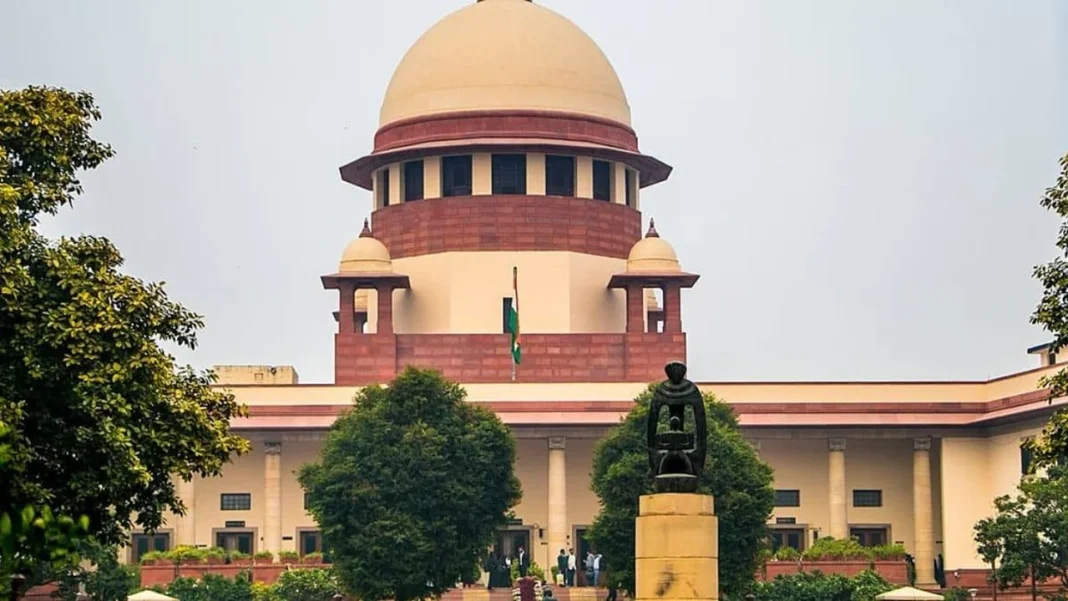
During the September 17 hearing, a Bench of Chief Justice Surya Kant and Justices Joymalya Bagchi and V Mohana said current Class 6 students could be given a transition window. Justice Bagchi suggested that R3 could remain optional for this batch and become mandatory for new Class 6 students from 2027. CBSE agreed to reconsider the suggestion.
Key points for students and parents are:
- CBSE’s existing 2026–27 framework still applies unless the Board changes it after the court hearing.
- The Supreme Court has suggested relief only for the current Class 6 transition issue.
- Students who want to study R3 this year could still be allowed to continue under the court’s proposal.
- The larger legal challenge to the language framework remains pending.
- The next hearing is scheduled for September 23, 2026.
What Three Languages Will Students Actually Study?
Under the CBSE framework, every student covered by the rule studies three languages, and at least two must be Bhartiya Bhashas. CBSE lists Hindi, Sanskrit, Tamil, Telugu, Kannada, Malayalam, Marathi, Bengali, Punjabi, Gujarati, Odia and Assamese among examples of Indian languages.
English, French, German, Arabic and Spanish are listed as non-native languages in CBSE’s June guidance. Hindi itself is not compulsory in every CBSE school. An official parliamentary reply published by CBSE states that Hindi is not mandatory at any level, although schools must meet the broader language-combination rules.
The National Curriculum Framework for School Education 2023 places multilingual learning within the Middle Stage, covering Classes 6 to 8, and carries language learning into later grades. CBSE says dedicated Class 6 R3 textbooks are being made available across 22 scheduled Indian languages through NCERT.
What Could Change For Class 6, 7, 8 And 9 Students?
The biggest immediate question concerns children already in Class 6. Under the existing CBSE guideline, they study three languages now and would face a Board examination in R3 in Class 10. If CBSE accepts the Supreme Court’s suggestion, the third language could become optional for this batch, while the mandatory system would start with the 2027 entrants.
Older students already have transitional relief. Current Class 7 and 8 students who were studying two non-native languages may retain them and add one Indian language, with R3 assessed internally. Current Class 9 students also study three languages, but their R3 is school-assessed and will not become a CBSE Board paper when they enter Class 10 in 2027–28. The current Class 10 batch remains under the older two-language system.
CBSE also told the court that a five-member committee was created on September 16 to review teacher availability, language choices, textbooks and digital resources. According to the Board’s note reported in court, 93.3% of 20,777 schools surveyed had teachers for at least two Indian languages.
The government’s Akashvani News report on the September 17 hearing also confirms that the court asked CBSE to consider moving mandatory Class 6 implementation to the 2027 academic session.
FAQs On The CBSE Three-Language Policy
Is the three-language rule cancelled for Class 6?
No, the court suggested reconsideration; CBSE must still respond before revised implementation becomes official nationwide.
Will Hindi become compulsory for every CBSE Class 6 student?
No, CBSE requires two Indian languages, but Hindi is not compulsory for every student nationwide.
Will current Class 9 students face an R3 Board examination?
No, their third language is school-assessed, with no CBSE R3 Board examination in Class 10.
What happens to current Class 6 students if CBSE agrees?
They could receive optional R3 treatment, while three-language study begins for 2027 Class 6 entrants.
When will the next Supreme Court hearing take place?
The hearing is scheduled for September 23, when CBSE is expected to return with instructions.
CBSE Updates: Results, Re-Evaluation & New Rules
Could On-Screen Marking Prevent Errors?
Check out how digital evaluation may reduce CBSE marking errors.
Why Is The Second Result Delayed?
Find out what students can do for Class 11 admission.
How Can Students Apply Re-Evaluation?
Uncover the steps for CBSE marks verification in 2026.
Could On-Screen Marking Delay Results?
Browse how digital marking may affect the 2026 result timeline.
How Can Students Check DigiLocker Results?
See how to access the CBSE 12th marksheet on DigiLocker.